
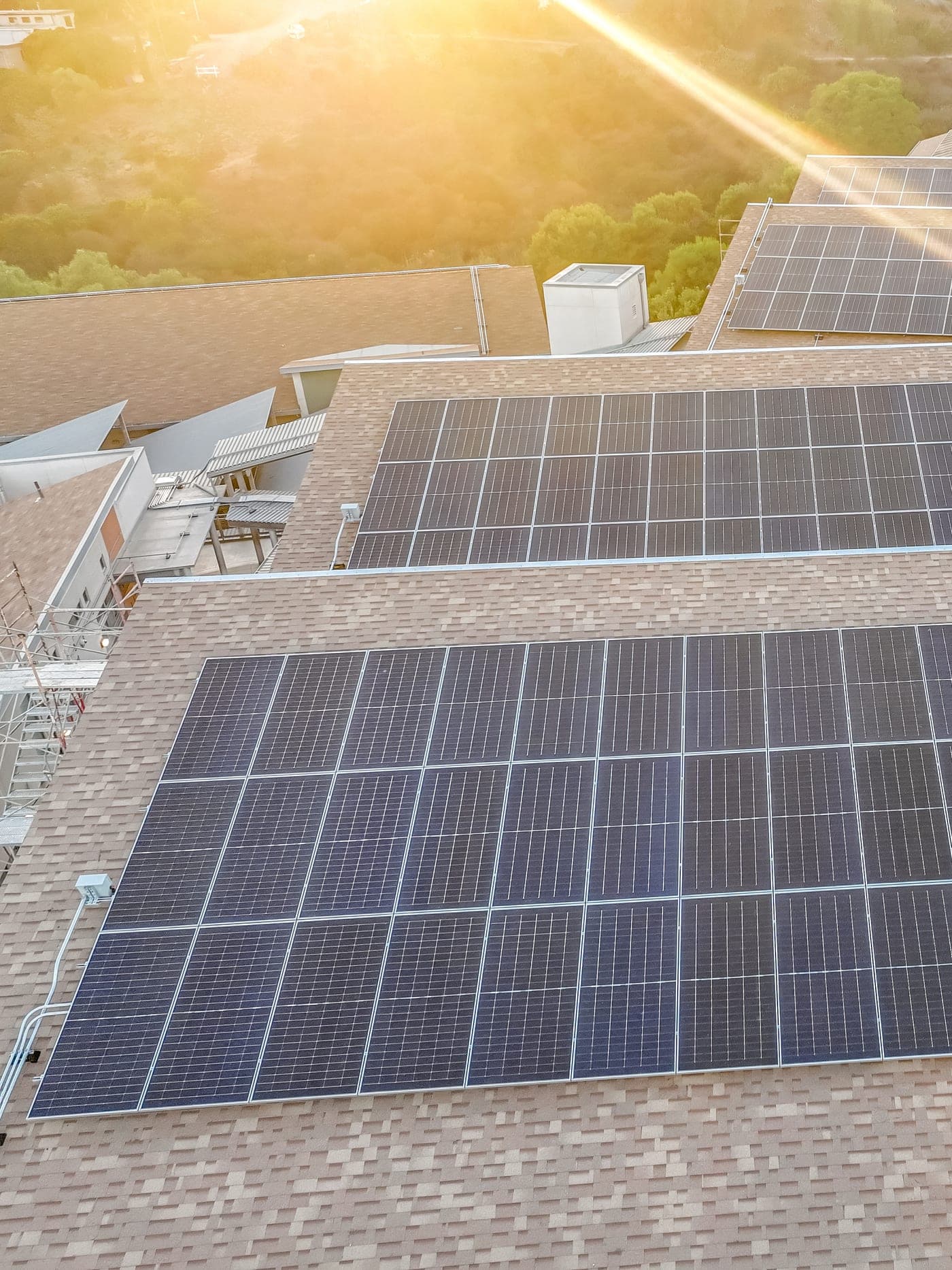
Technician installing commercial solar panels
Financial Incentives & Solar Financing

The Commercial Solar Investment Tax Credit (ITC) in 2026

A Complete Guide for San Diego Businesses

The federal Investment Tax Credit is the most powerful financial incentive available to San Diego businesses going solar. In 2026, qualifying commercial solar installations receive a 30% dollar-for-dollar federal tax credit, meaning for every $100,000 you invest in solar, $30,000 comes directly off your federal tax bill.

This guide covers exactly how the ITC works, who qualifies, what expenses are eligible, how to claim it, and how San Diego-specific bonus adders can push your effective credit above 30%.

01

What Is the Commercial Solar ITC?

The Investment Tax Credit (ITC) is a federal income tax credit under Section 48 of the Internal Revenue Code. It allows businesses that purchase and install qualifying solar energy systems to deduct a percentage of the total installed system cost directly from their federal tax liability.

Unlike a deduction (which reduces taxable income), a credit reduces actual taxes owed, making it substantially more valuable. A 30% credit on a $400,000 solar system equals $120,000 off your tax bill, not just $120,000 off your income.

The ITC is not a rebate. It is a reduction in federal taxes owed. You must have sufficient federal tax liability to use it in the year of installation — or carry it forward up to 20 years.

02

ITC Rate in 2026: 30% Through 2032

The Inflation Reduction Act of 2022 extended and enhanced the ITC:

YearITC Rate
2005–2027 (end of year)30% ITC (base rate)
2027 and beyond0% for commercial (scheduled expiration)

Locking in your solar installation in 2026 means capturing the full 30% rate before any future step-downs.

03

What Expenses Are ITC-Eligible?

The ITC applies to the total cost of your qualifying solar energy system, including:

  • Solar panels and racking
  • Inverters (string, microinverters, optimizers)
  • Wiring, conduit, and electrical equipment
  • Battery storage systems (when charged primarily by solar)
  • Labor costs for installation
  • Permitting and interconnection fees
  • Engineering and design fees
  • Sales tax on equipment

Items NOT eligible include ongoing maintenance, monitoring subscriptions, and financing costs (interest).

04

ITC Bonus Adders: Pushing Above 30%

The IRA created several bonus adder categories that can increase your ITC above the 30% base rate. These are subject to eligibility requirements and IRS guidance, Indigo Energy evaluates every project for adder eligibility.

Domestic Content Bonus (+10%)

Installations using qualifying domestically manufactured solar modules, inverters, and structural components can claim an additional 10% ITC, bringing the total to 40%. This requires meeting IRS and DOE domestic content requirements and using certified equipment.

Energy Community Bonus (+10%)

Systems installed in qualifying 'energy communities,' census tracts that have experienced job losses from fossil fuel industry closures, or that have elevated unemployment, receive a 10% bonus adder. Certain San Diego County industrial areas and communities may qualify. Indigo Energy checks current Energy Community maps for every commercial project.

Low-Income Community Bonus (+10–20%)

Systems serving low-income residential buildings or located in low-income communities as defined by census data qualify for a 10% adder. Systems providing direct economic benefit to low-income households qualify for 20%. Some commercial solar projects in San Diego qualify.

05

Claiming the ITC: The Process

  1. 1Solar system is placed in service (interconnected and operational)
  2. 2Your CPA or tax advisor files IRS Form 3468 (Investment Credit) with your annual business tax return
  3. 3The credit is applied dollar-for-dollar against your federal tax liability for that year
  4. 4Unused credit can be carried back 1 year or forward up to 20 years
06

ITC + MACRS: Stacking Accelerated Depreciation

The ITC is most powerful when combined with MACRS (Modified Accelerated Cost Recovery System) depreciation. Solar systems qualify as 5-year MACRS property, allowing businesses to depreciate the system rapidly and generate significant additional tax savings.

The depreciable basis for MACRS is reduced by 50% of the ITC, so for a $500,000 system claiming a 30% ITC ($150,000), the depreciable basis is $500,000 – $75,000 = $425,000. At a 21% corporate rate, this yields approximately $89,250 in depreciation tax savings over five years.

ITC + MACRS combined: A $500,000 system can yield $150,000 (ITC) + $89,250 (MACRS) = $239,250 in combined federal tax benefits, before any state incentives.

07

ITC for Nonprofits: Direct Pay (Elective Pay)

Tax-exempt organizations (501(c)(3) nonprofits, government entities, tribal governments) historically could not use the ITC. The IRA changed this through 'Direct Pay' or 'Elective Pay' provisions, effective for systems placed in service after December 31, 2022.

Under Direct Pay, qualifying nonprofits file an IRS election and receive a cash payment from the IRS equal to the ITC amount, even with zero tax liability. This is a direct reimbursement, not a loan. For a $300,000 solar system, a qualifying nonprofit can receive a $90,000 IRS payment.

Common ITC Questions from San Diego Businesses

Yes. If you own the solar system — whether purchased with cash, a commercial loan, or an equipment finance agreement — you are eligible for the ITC. The credit is based on total installed cost, not your out-of-pocket cash contribution.

No. Under a Power Purchase Agreement, the solar developer owns the system and claims the ITC themselves. Your business buys power at a contract rate but does not own the system and therefore does not receive the ITC. Ownership financing (loans, leases with purchase options) is required to capture the ITC directly.

Unused ITC can be carried back 1 year and forward up to 20 years. Many San Diego businesses spread ITC benefits across multiple tax years with guidance from their CPA.

The ITC applies to all qualifying solar energy systems regardless of mounting type — rooftop, carport (ETCP), ground-mount, or floating arrays — as long as the system generates electricity and meets IRS requirements.

Battery storage added in the same tax year as the solar system can be included in the ITC basis. Storage added in a later year may qualify separately for the Standalone Storage ITC (Section 48E) at 30%, which was established by the IRA. Indigo Energy advises clients on optimal timing.

Indigo Energy Provides Every Commercial Client with an ITC Eligibility Summary

We coordinate with your CPA to ensure maximum credit capture. Contact us at (858) 281-5110 or visit goindigoenergy.com to start your commercial solar assessment.