
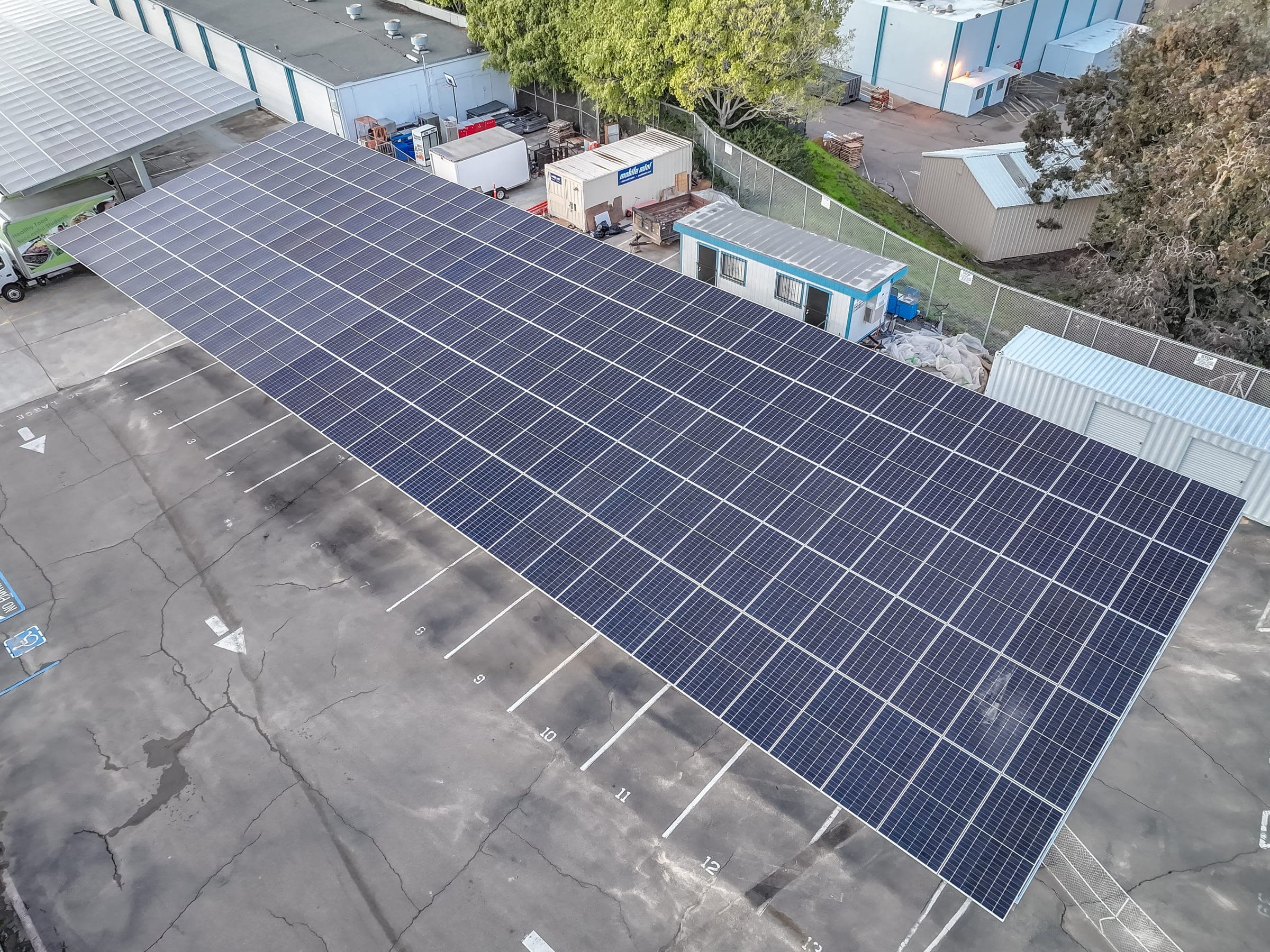
Commercial battery storage array
Financial Incentives & Solar Financing

Commercial Battery Storage in San Diego

A Complete 2026 Guide

Battery energy storage systems (BESS) are transforming the economics of commercial solar in San Diego. Whether you’re looking to reduce SDG&E demand charges, maximize NEM 3.0 export value, or protect your business from grid outages, commercial battery storage is now a mainstream, financially compelling technology for San Diego businesses.

01

Why Commercial Battery Storage Is Booming in San Diego

Three converging forces are driving commercial BESS adoption in San Diego:

  • NEM 3.0: Lower daytime export rates make storage essential for capturing solar value during evening TOU peaks.
  • SDG&E's high TOU rates: The difference between off-peak ($0.18/kWh) and on-peak rates ($0.42–$0.55/kWh) makes charge-and-discharge arbitrage highly profitable.
  • SGIP rebates: California's Self-Generation Incentive Program subsidizes 25–100%+ of battery costs for qualifying businesses, dramatically improving economics.
02

How Commercial Battery Storage Works

A commercial BESS charges from solar panels during low-cost or high-production periods and discharges during peak demand windows or grid outages. Modern systems include a battery management system (BMS) and energy management software that automatically optimizes charge/discharge cycles based on your rate schedule, solar forecast, and load patterns.

Key components of a commercial BESS:

  • Battery modules: Most commercial systems use lithium iron phosphate (LFP) chemistry, offering excellent safety, 4,000+ cycle life, and 10–15 year operational lifespan.
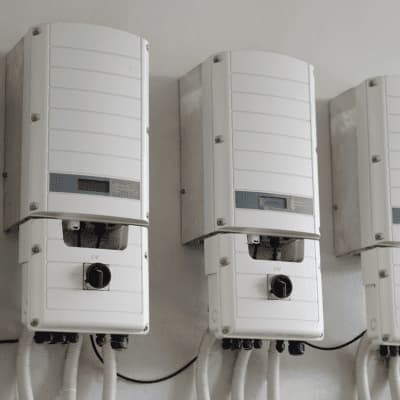
  • Inverter/charger: Converts DC battery power to AC for building use. May be integrated (AC-coupled) or shared with the solar inverter (DC-coupled).
  • Energy management system (EMS): Software that controls charge/discharge based on utility rate schedules, demand targets, solar forecasts, and grid signals.
  • Metering and monitoring: Commercial-grade monitoring tracks system performance, state of charge, and financial savings in real time.
Commercial battery storage equipment
03

Commercial Battery Storage Sizing

Business TypeRecommended BESS SizePrimary Value DriverEst. Annual BESS Benefit
Small commercial (< 100 kW solar)50–100 kWhNEM 3.0 optimization$8,000–$18,000/yr
Mid-size commercial (100–500 kW)200–500 kWhDemand charge + NEM 3.0$25,000–$85,000/yr
Large commercial / industrial (500 kW+)500 kWh–2 MWh+Demand charge reduction$80,000–$300,000+/yr
Critical facility (data center, hospital)Custom (resilience-first)Backup + demand reductionDepends on outage cost avoidance
04

SGIP Rebates: The Financial Engine of Commercial BESS in San Diego

California's Self-Generation Incentive Program (SGIP) is administered by SDG&E in San Diego and provides cash rebates for qualifying battery storage systems. SGIP rebate amounts depend on the program 'step' when you apply, rebates decrease as each step fills.

SGIP TierCustomer TypeRebate Range ($/Wh)200 kWh System Rebate
Equity ResiliencyHigh-fire-risk area, medical needs$1.00/Wh~$200,000
Equity BudgetLow-income / disadvantaged community$0.85–$1.00/Wh$170,000–$200,000
Large Generator (commercial)Non-residential > 10 kW$0.25–$0.60/Wh$50,000–$120,000
Self-Generation GeneralStandard commercial$0.20–$0.40/Wh$40,000–$80,000

SGIP rebates are paid after installation and verification. Applications must be submitted before installation begins. Indigo Energy manages the entire SGIP application process for our clients.

05

Demand Charge Reduction: The Core Commercial BESS Revenue Stream

For San Diego businesses on SDG&E's demand-metered rate schedules (TOU-BEC, TOU-8, PA-TOU, etc.), demand charges are based on your highest 15-minute power draw in a billing period. These charges often represent 30–50% of commercial bills.

A commercial BESS programmed to limit peak demand can eliminate or dramatically reduce these charges. Indigo Energy models every commercial storage project with interval demand data to quantify exactly how much demand charge reduction your system will achieve.

One San Diego food distribution client reduced their monthly SDG&E demand charges by $14,500/month after installing a 500 kWh BESS — a savings of $174,000 annually, before any solar production value is counted.

06

Backup Power and Grid Resilience

San Diego's grid has experienced increasing reliability challenges due to wildfires, heat events, and infrastructure aging. For businesses where a grid outage means lost revenue, food safety issues, or operational shutdown, a commercial BESS provides critical backup power capability.

In backup mode, a properly configured BESS can power essential loads — refrigeration, lighting, security systems, POS terminals — during grid outages. Paired with solar, a system can provide extended backup during multi-day outages without a generator.

Frequently Asked Questions

Indigo Energy primarily works with Tier 1 commercial BESS manufacturers including Tesla Megapack/Powerpack, Powin, CATL-based systems, and Enphase IQ commercial solutions, depending on project scale. Selection is based on your specific load profile, integration requirements, and budget.

Commercial LFP batteries are warrantied for 10 years and typically deliver 4,000–6,000+ full charge-discharge cycles before meaningful capacity degradation. In a typical commercial application (1–2 cycles/day), this corresponds to 10–15+ years of useful service life.

Yes. AC-coupled battery storage can be added to most existing commercial solar systems. Adding storage may require an amended SDG&E interconnection application. Indigo Energy evaluates existing solar systems for storage retrofits at no charge.

Modern LFP battery chemistry is the industry standard for commercial storage due to its superior thermal stability and fire resistance versus older NMC chemistry. Commercial BESS installations must comply with NFPA 855 fire codes and require City of San Diego or county fire department review. Indigo Energy manages all fire code compliance for our installations.

The ideal time is alongside a new solar installation, as combined interconnection and installation reduces total project cost. However, storage can be added to existing solar at any time. With SGIP rebates and NEM 3.0 economics, the business case for standalone storage additions is also increasingly strong.

Get Your Free Commercial Solar Assessment

Published by Indigo Energy · goindigoenergy.com · San Diego, CA 92101