


The Self-Generation Incentive Program (SGIP) is California’s battery and solar rebate, and in San Diego County it has become narrow. As of December 31, 2025, new applications in SDG&E territory are accepted only under the Residential Solar and Storage Equity (RSSE) budget, and that money is fully reserved, so new applicants join a waitlist funded as other projects cancel. If you are a homeowner who qualifies on income, SGIP can still cover most of a system. If you own a business or a multifamily property, you should design the project so it pays back with or without the rebate. That is how we approach every San Diego project at Indigo Energy.
TL;DR
- SGIP is a CPUC program. In San Diego County, the Center for Sustainable Energy (CSE) administers it for SDG&E customers.
- Only the RSSE budget takes new SDG&E applications, and it is waitlisted. Other budgets, including non-residential storage, closed to new submissions on December 31, 2025.
- RSSE pays $1,100 per kWh of storage and $3,100 per kW of paired solar, but only for income-qualified single-family and qualifying multifamily properties.
- Participation carries 10 years of obligations, such as keeping the equipment in place and cycling the battery.
- The sound approach is a financial model that works on its own savings, with any SGIP award treated as an upside.
Table of Contents
- What SGIP is and who runs it in San Diego
- What changed: the 2025 close-out
- How much the RSSE rebate pays
- Who qualifies
- How the application works
- What you commit to for 10 years
- What business and multifamily owners should do
- Questions to settle before you sign anything
- Promo: a San Diego design that stands on its own numbers
- Perspective: plan the project, then treat the rebate as upside
- FAQ
- Sources
What SGIP is and who runs it in San Diego
SGIP is a program of the California Public Utilities Commission (CPUC) that pays incentives for qualifying systems installed on the customer’s side of the utility meter. Think of a home or business battery, or solar paired with one. California splits the program among regional administrators. For SDG&E customers, that administrator is the Center for Sustainable Energy, a nonprofit. The same page reports more than $284 million in incentives awarded in SDG&E territory and more than 9,706 storage projects with reserved incentives. SGIP has been a major driver of San Diego battery installs.
The program you may have read about in older articles is not the one that exists today. Early guides quote per-kWh rates from step-based schedules that have since ended. Use those pages for history only, and treat the figures below as the current framework.
What changed: the 2025 close-out
Two decisions reshaped SGIP in San Diego.
- Ratepayer-funded budgets closed. A December 2025 program announcement says the Large-Scale Storage, Small Residential Storage, Non-Residential Storage Equity, Equity Resiliency and Generation budgets, along with RSSE-Ratepayer, closed to new submissions on December 31, 2025. Any application still on a waitlist that day was cancelled.
- AB 209 budgets stayed open, with an end date. CPUC Decision 25-12-003 closes the AB 209 program to new applications on June 30, 2028. It also requires administrators with unspent funds to transfer them to administrators that have waitlists.
The practical result: SDG&E-area applications now go only to RSSE, whose funds are fully reserved. New applications are placed in order received and funded when earlier projects drop out. SDG&E’s own 2026 filing shows the volume is small. It reports 23 RSSE applications totaling 0.277 MW received in the second quarter of 2026.
A waitlist spot is not an award. Funds can move as projects cancel and as the CPUC reallocates unspent money, so the timing of any single application cannot be predicted.
How much the RSSE rebate pays
The CPUC lists the RSSE rates at $1,100 per kilowatt-hour (kWh) of storage and $3,100 per kilowatt (kW) of solar. A kWh measures how much energy a battery holds. A kW measures how much power a solar array produces at its peak.
The CPUC fact sheet sets the sizing limits for a single-family home:
- Incentives for a 15 kWh battery and a 5 kW solar system without extra paperwork.
- More solar, or storage up to 30 kWh, requires a load justification: documentation that your household actually uses that much energy.
The workshop materials CSE presented in 2025 put the storage cap at roughly $33,000 for 30 kWh, with systems above 15 kWh (about $16,500) needing load justification.
A worked example
Take a qualifying household with a 15 kWh battery and 5 kW of solar:
| Component | Size | Rate | Incentive |
|---|---|---|---|
| Battery storage | 15 kWh | $1,100 per kWh | $16,500 |
| Paired solar | 5 kW | $3,100 per kW | $15,500 |
| Total at the listed rates | $32,000 |
The fact sheet says the incentive, combined with the federal tax credit, covers about 100% of the cost of an average solar-and-storage system. Your award is still capped at your verified project cost, and other incentives you receive can reduce it. A real number comes from a real design and a real quote, not from multiplying rates.
Who qualifies
RSSE is an equity program. It is built for households and buildings with lower incomes, and the CPUC fact sheet lists the paths.
Single-family homes qualify if any one of these applies:
- Household income is at or below 80% of Area Median Income (AMI), meaning the median income for your area.
- You participate in, or have reserved, incentives under the SASH or DAC-SASH solar programs for low-income and disadvantaged-community homeowners.
- You currently participate in and are eligible for CARE, FERA or ESA. These are utility bill discount and energy savings programs for qualifying households.
Multifamily properties qualify if they are low-income housing with at least five rental units that meet the Disadvantaged Community or income criteria, or if they previously took part in the SOMAH or MASH solar programs for multifamily housing.
SDG&E also lists DAC-SASH and the San Diego Solar Equity Program alongside SGIP as incentives for residential customers. It notes that residential customers may qualify for a 30% federal Residential Clean Energy Credit. If you are in an income-qualified household, ask about stacking.
A market-rate commercial building, a brewery, a warehouse or a typical office property does not fit these categories. If you manage one, the question is how to build the strongest project without SGIP. We cover that below.
How the application works
Applications are submitted through the program website by an approved SGIP developer, not directly by the customer, according to the program FAQ. The steps for residential projects are:
- Reservation Request Form (RRF). This submits documentation that an eligible system is planned. It reserves funds, or, in today’s RSSE market, places you on the waitlist.
- Installation. The installer must hold an active California contractor license (CSLB) matching the technology being installed.
- Incentive Claim Form (ICF). This verifies the system is installed and interconnected to the grid, after which the incentive is paid.
Non-residential projects of 10 kW or more add a Proof of Project Milestone step. Under the CPUC fact sheet, an Advanced Payment Program offers 50% of the incentive upfront. After a reservation, you then have one year to meet all program requirements.
The common failure is timing. A system built or contracted before the application is in order can put the incentive at risk. Sequence the design, permit and application together.
What you commit to for 10 years
SGIP money comes with obligations. SDG&E-territory participants have ongoing responsibilities that include:
- Keeping the equipment in place for 10 years.
- Meeting battery discharge requirements, which the 2026 handbook sets at 52 equivalent full discharges a year for residential storage.
- Enrolling in a time-of-use rate if you are a residential customer without solar.
- Enrolling in demand response, except where the rules waive it.
- Enrolling in, or transitioning to, the Net Billing Tariff if you have solar.
The January 2026 advice letter implementing Decision 25-12-003 removed the demand-response requirement for the RSSE budget and shortened the performance-based incentive period from five years to two for projects entering it on or after December 31, 2025. Read the current handbook before signing, because rules like these have been revised often.
This is also why battery sizing and software settings matter. A battery that is configured well can meet the discharge requirement while it also serves your savings goals.
What business and multifamily owners should do
For a commercial or industrial property in San Diego County, the non-residential SGIP budgets are closed to new submissions. That does not end the case for storage. Commercial economics rest on three levers that do not depend on a rebate:
- Demand charges. SDG&E bills many commercial customers for their peak power draw during a month, not only total kWh. A battery that trims those peaks reduces a bill line that solar alone often leaves untouched.
- Time-of-use arbitrage. Solar and storage let you shift consumption away from the most expensive hours.
- Resilience. Storage can keep critical loads running during an outage.
Our SGIP rebate guide for California businesses explains the program’s history for commercial owners, and our page on commercial solar incentives in San Diego covers the other programs and tax credits to model. For storage design, see our commercial battery storage guide for San Diego.
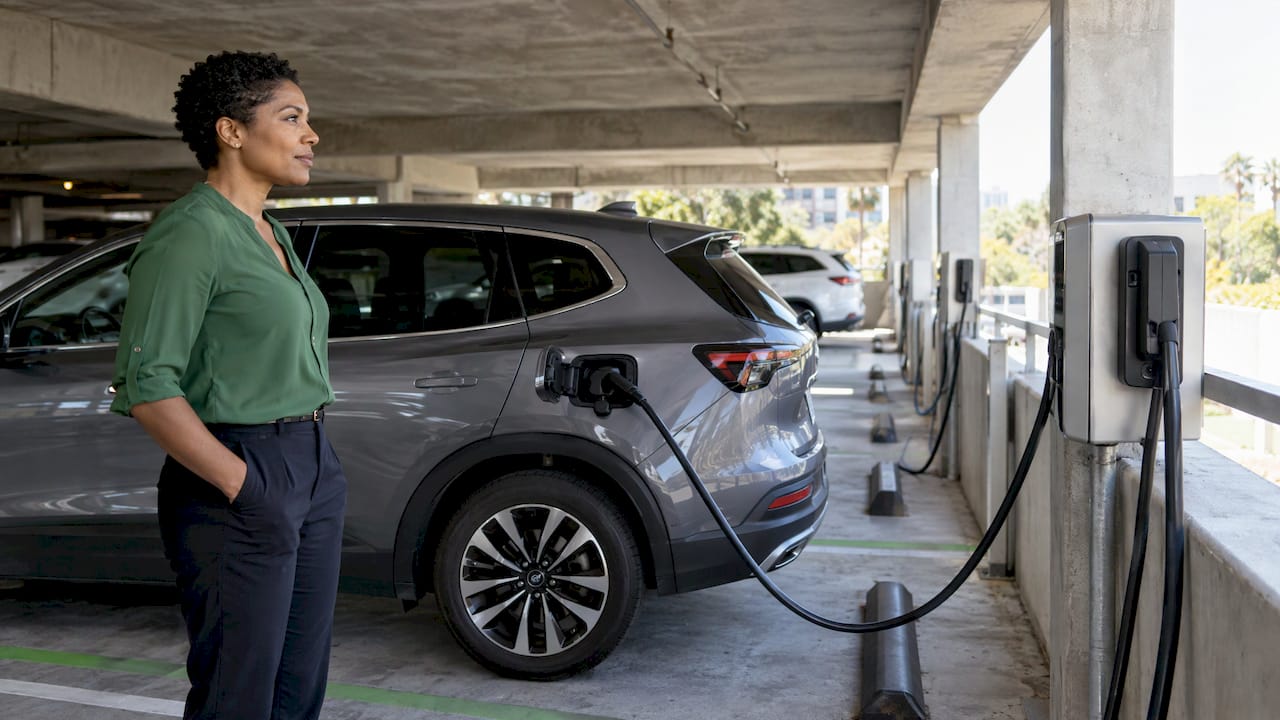
If EV charging is part of the plan, note that the federal charger tax credit ended for property placed in service after June 30, 2026. Model charging projects on their operating savings.
Questions to settle before you sign anything
Whether you are on the SGIP waitlist or planning without it, these questions protect your return:
- Does the proposal show savings with and without the rebate? A quote that only works with SGIP is a bet on a waitlist.
- Is the incentive math capped at cost? Payment cannot exceed verified project costs, and other incentives reduce it.
- Is the system sized from your actual load? Your usage data justifies a larger battery or array, and oversizing wastes money.
- Who files the permits and interconnection? Local jurisdictions in San Diego County have different permitting practices, and delays cost money.
- What do the warranty and monitoring cover over the 10-year period? Obligations run that long.
Promo: a San Diego design that stands on its own numbers
Indigo Energy is a San Diego County solar contractor. We design and install solar, battery storage and EV charging for homes and commercial properties, and our work includes site assessment, permitting, financial ROI analysis and ongoing monitoring. We publish clear pricing logic and show you the return before you commit, so you can decide with or without an incentive.
If you are weighing a battery, start with our battery and storage page. For homes, see residential solar installation. For commercial properties, our services page lists everything we do.
Perspective: plan the project, then treat the rebate as upside
San Diego customers have seen SGIP change from an open rebate to a waitlist. We think that makes the quality of the underlying project more important, not less.
When we work with a homeowner, a property manager or a developer, we start with the energy bill, the building’s load and the rate schedule. We build an ROI analysis that shows what the system saves on its own. If an incentive applies, it improves a project that already makes sense.
We also get involved early. For new construction, deciding on solar and storage at the design stage prevents costly mistakes, such as conduit that has to be reopened or panels sized without a battery in mind. Local permitting knowledge keeps schedules realistic.
Our advice is to ask for the numbers in writing, with and without incentives, and to choose the design that earns its keep.
Curtis Williamson
FAQ
Is SGIP still available in San Diego?
Only in a limited form. Since December 31, 2025, new SDG&E-area applications are accepted only under the RSSE budget. Its funds are fully reserved, so new applications go on a waitlist in order received. The AB 209 program is scheduled to stop taking new applications on June 30, 2028.
How much is the SGIP rebate for a home battery?
The RSSE rate is $1,100 per kWh of storage plus $3,100 per kW of paired solar. A single-family household can be covered for a 15 kWh battery and 5 kW of solar, and up to 30 kWh with a load justification. The payment is capped at verified project cost.
Who do I contact for an SGIP rebate in SDG&E territory?
The program administrator for the SDG&E territory is the Center for Sustainable Energy. Applications go through the program website via an approved SGIP developer, and the installer must hold the right CSLB license. We can walk you through the design and permitting side of the project.
Can a business get SGIP in San Diego County?
The non-residential storage budgets closed to new submissions on December 31, 2025. Multifamily properties with low-income housing may still fit RSSE. A commercial owner is better served by a model built on demand charge savings and other incentives, which our team can prepare.
Do I have to keep the battery if I receive SGIP?
Yes. SDG&E-territory participants have a 10-year equipment permanency requirement, plus discharge and rate enrollment rules. Read the current handbook before you reserve funds.
Sources
- Self-Generation Incentive Program, CPUC
- CPUC RSSE fact sheet
- Self-Generation Incentive Program, Center for Sustainable Energy
- Program Participant Information, SGIP San Diego
- SGIP 3rd Quarterly Workshop of 2025
- SGIP program announcements
- SGIP Equity and Equity Resiliency FAQ
- CPUC Decision 25-12-003
- SDG&E Q2 2026 quarterly update
- Considering Solar, SDG&E
- U.S. EV buyers: charger tax credit through June 30, 2026