
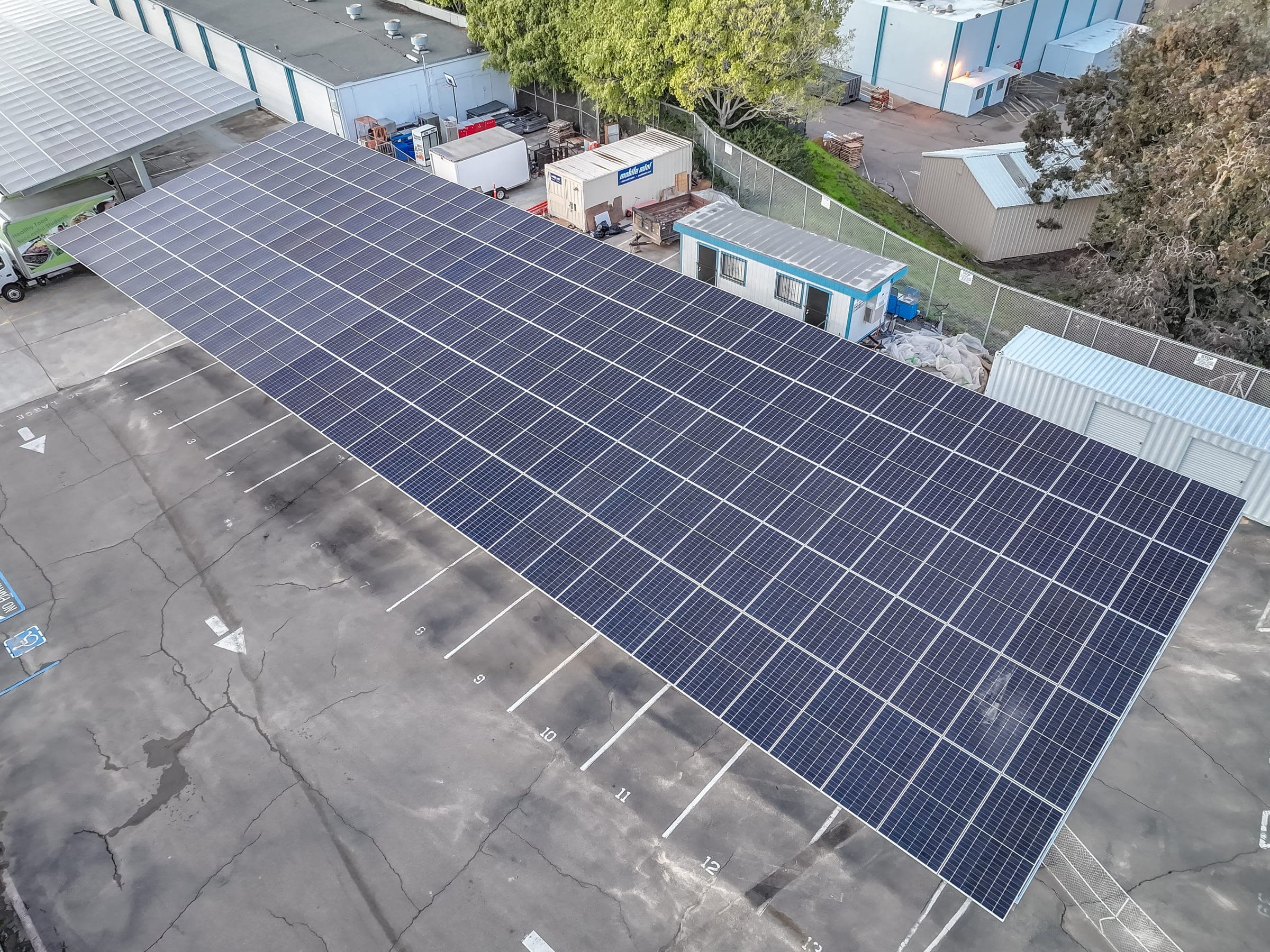
Battery storage units installed alongside a solar array in San Diego County
Battery & Storage

Battery Storage and San Diego Power Outages

What a battery actually covers when the grid goes down

Between wildfire-season Public Safety Power Shutoffs, heat-wave demand and ageing infrastructure, losing power in San Diego County is no longer unusual. Solar alone does not help — for safety reasons a grid-tied array shuts down during an outage unless a battery is present.

This page covers what storage genuinely protects, how it earns its keep on an SDG&E rate schedule the rest of the year, and where the federal tax position stands in 2026 for homes and for businesses.

01

Why Outages Keep Happening Here

California's grid is under pressure from three directions at once, and San Diego County sits in the path of all three.

  • Public Safety Power Shutoffs — in dry, windy conditions utilities de-energise lines to prevent ignition, taking whole neighbourhoods offline for planned periods.
  • Heat-wave demand — extended high temperatures drive air-conditioning load to levels that strain generation and transmission.
  • Ageing infrastructure — equipment installed for a smaller, less electrified demand profile.

SDG&E customers carry some of the highest electricity rates in the country while dealing with this. That combination — expensive power that is also not fully dependable — is the practical case for storage.

02

Solar Without a Battery Shuts Off During an Outage

This surprises most people, and it is worth being blunt about. A standard grid-tied solar array stops producing the moment the grid goes down.

It is a safety requirement, not a fault. If your system kept exporting into lines that utility crews believe are dead, it would put those crews at risk. The inverter is required to disconnect.

A battery with the right islanding equipment changes that. It separates your property from the grid and keeps your circuits running from stored energy, with the solar array able to recharge it through the day.

The practical consequence

If outage protection is why you are considering solar, solar by itself will not deliver it. The battery is the part that does the job.

03

How It Works Across a Normal Day

  • Daytime — the array powers the building and charges the battery with what is left over.
  • Evening peak — the property draws from the battery instead of buying at the most expensive hours of the rate schedule.
  • Overnight — the battery covers what it can; anything beyond that comes from the grid at off-peak rates.
  • During an outage — the system disconnects from the grid and runs your designated circuits from storage, recharging from solar each day.

The second point is where a battery earns money in a normal month. Under time-of-use pricing the gap between peak and off-peak rates is what makes stored energy worth more than exported energy.

04

What a Battery Realistically Covers

Runtime is a function of how much capacity you install and what you ask it to carry. That is a design decision, not a product specification, and it is the first thing worth being honest about.

A system sized for essentials — refrigeration, lighting, networking, medical equipment, a few outlets — will run far longer than one asked to hold whole-building air conditioning through a heatwave.

For a commercial property the question is usually different again: not comfort, but which operations cannot stop. Refrigerated stock, servers, access control, life-safety systems. We size from that list rather than from square footage.

05

Where the Tax Position Stands in 2026

This changed significantly and a lot of material still online has not caught up.

For homeowners

The federal Residential Clean Energy Credit under Section 25D was terminated for expenditures made after 31 December 2025. A residential battery installed today does not attract that 30% credit. Any page still promising it is out of date.

For businesses, schools, churches and nonprofits

Energy storage remains qualifying property under Section 48E, the commercial credit, at 30%. Systems below 1 MW are exempt from prevailing-wage and apprenticeship requirements and reach the full rate automatically — which covers essentially every commercial storage project in San Diego County.

California programmes are separate

State and utility storage incentives, including the Self-Generation Incentive Program, are run by the California Public Utilities Commission and are independent of the federal changes. Budgets, categories and rates move, so we check current standing at quote rather than publishing a number that may already have shifted.

Tax treatment depends on your circumstances and nothing here is tax advice. We design and install the system and work alongside your accountant on how the credit applies.

06

What We Look At Before Quoting

  • Twelve months of SDG&E bills, to see your real consumption shape rather than an average.
  • Your rate schedule, because peak-to-off-peak spread determines what stored energy is worth to you.
  • The circuits that genuinely need to stay live, agreed with you rather than assumed.
  • Main panel capacity and where the equipment can physically and safely go.
  • Whether storage is best installed with the array or added later, which changes both cost and tax treatment.

Battery Storage Questions We Are Asked in San Diego

Not on their own. A grid-tied array is required to shut down during an outage so it cannot energise lines that utility crews are working on. Adding a battery with islanding capability is what allows the system to keep running your circuits.

It depends entirely on installed capacity and what you ask it to carry. A system covering essentials runs much longer than one carrying full air conditioning. We size it against the specific circuits you want protected rather than quoting a generic figure.

No. The federal residential credit was terminated for expenditures after 31 December 2025. Commercial, school, church and nonprofit projects are a different provision and still qualify at 30%.

Yes. Energy storage is qualifying property under Section 48E at 30%, and capacity below 1 MW is exempt from prevailing-wage and apprenticeship requirements, so it reaches the full rate without that compliance burden.

It can — a standalone battery still provides outage cover and can charge from the grid at off-peak rates. Pairing it with solar is usually better value, because the array recharges it at no marginal cost and keeps it useful through a multi-day outage.

The Self-Generation Incentive Program offers storage rebates through the CPUC, with different categories and budgets. Because those budgets and rates change, we confirm what is actually available to you at the time of quoting instead of publishing a figure here.

Very little day to day. Systems are monitored remotely, and the main attention points are firmware, the monitoring connection and periodic inspection. We include monitoring so performance issues surface before you notice them.

Find out what a battery would actually cover at your property

We size storage from your real load, not a brochure figure — which circuits matter, how long they need to run, and whether the numbers justify it. Call 858-281-5110 for a free assessment.